Silence at the Counter: Why the Person Who Knows Your Cheapest Option Often Can't Bring It Up
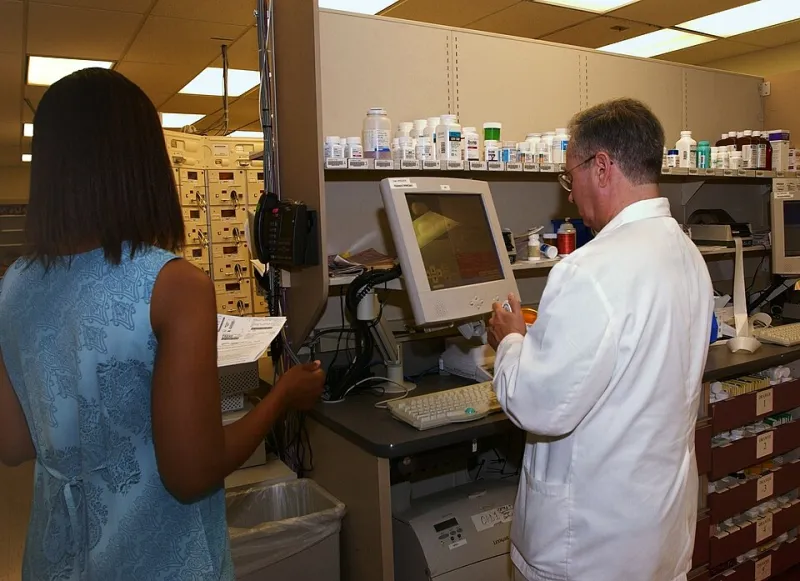
Photo: APhA, Public domain, via Wikimedia Commons
There is a peculiar irony at the heart of American prescription pricing: the professional most likely to know exactly what your medication will cost under every possible payment arrangement is often contractually discouraged from telling you. At RxPriceWatch, we spend a great deal of time documenting price variation across pharmacies, insurers, and discount programs. We would gladly be put out of that business if the person standing six feet away from you could simply say, "Paying cash is $12 cheaper than your copay."
The Layers of Quiet
Why doesn't this conversation happen? Several forces converge.
Legacy gag clauses. In the late 2010s, several states passed laws banning "gag clauses" — contract provisions that prohibited pharmacists from telling patients when paying cash would cost less than their insurance copay. The federal Know the Lowest Price Act extended this protection to Medicare and Medicaid patients in 2018. But these laws prohibit the worst practice; they do not require proactive disclosure. A pharmacist who stays silent is breaking nothing.
Corporate scripting. Chain pharmacies operate on tight interaction windows. The software prompts a scripted workflow: verify, counsel on side effects, process payment. Price optimization is not on the screen. A pharmacist who deviates to walk a patient through three payment scenarios may be adding ninety seconds the schedule doesn't allow.
Fear of the gray zone. Advising a patient to skip their insurance — even when it saves money — can complicate the pharmacy's relationship with payers and, for certain patients, raise questions about accumulator program consequences. Many pharmacists simply conclude that the safest sentence is no sentence.
Why This Should Offend Everyone
We are neutral on many industry disputes, but this one strikes us as indefensible. Price transparency laws, hospital chargemasters, and comparison websites all address the problem downstream. The transaction itself is where transparency matters most — and at that moment, we have engineered a system where the informed party is structurally muted.
Patients on fixed incomes routinely overpay by $10, $30, sometimes $100 per refill for no reason other than that nobody told them the cash price existed. Multiply that across millions of refills and you have a quiet transfer of billions of dollars from the least informed to the best positioned.
The Questions That Unlock the Silence
Here is the practical takeaway, and it matters more than any legislation in the near term: the gag rules that remain do not prevent a pharmacist from answering. They only prevent — or fail to compel — unprompted disclosure. So prompt.
Ask these four questions at every new or refilled prescription:
- "What's the cash price without insurance?" This is a legal question with a legal answer.
- "Is there a discount program or list price that's cheaper than my copay?"
- "Is there a therapeutic alternative that costs less?" Pharmacists can discuss alternatives; prescribers make the final call.
- "How will this payment method be recorded — does it count toward my deductible?"
Ask them politely, ask them every time, and you will find that the silence at the counter was never a wall. It was a door that no one had pushed.
A Modest Proposal
We would like to see states move beyond prohibiting gag clauses toward requiring disclosure: a simple printed or on-screen comparison of the insurance copay, the cash price, and the best available discount price for every prescription. Pharmacists already generate this data internally. Surfacing it costs almost nothing.
Until then, the burden falls on patients — which is precisely backwards. But backwards is where American drug pricing usually lives, and the patients who learn to push the door open will keep the savings the system declines to volunteer.