Coupons, Discount Apps, or Insurance: Which Payment Method Actually Saves You the Most on Common Prescriptions?
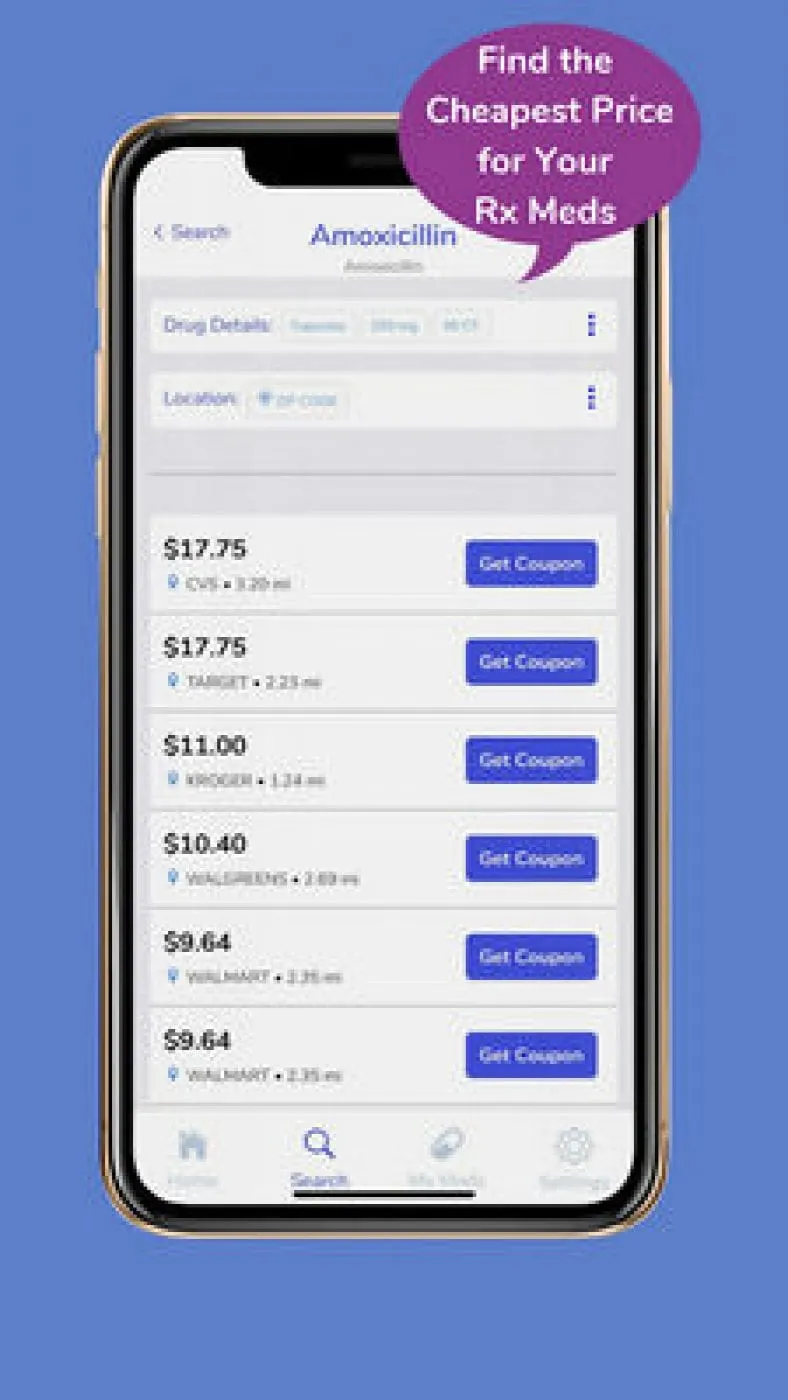
Photo: person comparing prescription drug prices on smartphone at pharmacy, via freeappsforme.com
For most Americans, filling a prescription involves a fairly automatic sequence: hand over the insurance card, pay whatever the copay turns out to be, and move on. Few patients stop to question whether their insurance is actually offering the best available price—or whether a discount app or manufacturer coupon might result in lower out-of-pocket spending.
The data, however, suggests that questioning this default assumption is well worth the effort. Across a range of commonly prescribed medications, the least expensive payment option varies considerably by drug, and in a notable number of cases, paying cash through a discount platform beats the insurance copay by a meaningful margin.
This analysis examines out-of-pocket costs across four payment methods—insurance copays, GoodRx discount pricing, manufacturer coupons, and straight cash prices—for ten widely prescribed medications. The figures cited reflect typical costs observed in major US metropolitan markets as of the most recent available pricing data and are intended to illustrate general patterns rather than guarantee specific prices at any individual pharmacy.
The Four Payment Methods, Defined
Before comparing costs, it is useful to clarify what each payment method actually represents:
Insurance copay: The fixed amount a patient pays when their insurance processes the claim. Varies by plan tier, deductible status, and whether the drug is on the plan's formulary.
GoodRx (and similar discount apps): Free platforms that provide pre-negotiated cash prices through contracts with pharmacy benefit managers. The patient pays this price directly, bypassing insurance entirely. Similar platforms include Blink Health, RxSaver, and Cost Plus Drugs.
Manufacturer coupons and copay cards: Offered by brand-name drug makers to reduce out-of-pocket costs for commercially insured patients. Generally not available to those on federal insurance programs.
Cash price: The pharmacy's listed price without any insurance, coupon, or discount program applied. Typically the highest of the four options for brand-name drugs, though not always for generics.
Side-by-Side: Ten Common Prescriptions
1. Metformin (500mg, 60 tablets — generic)
- Insurance copay: $0–$10 (most plans cover as a preferred generic)
- GoodRx price: $4–$9 at major chains
- Manufacturer coupon: Not applicable (generic only)
- Cash price: $12–$25
Verdict: Insurance and GoodRx are comparably priced for most patients. If your deductible hasn't been met, GoodRx may be the better choice.
2. Lisinopril (10mg, 30 tablets — generic)
- Insurance copay: $0–$10
- GoodRx price: $4–$8
- Manufacturer coupon: Not applicable
- Cash price: $10–$18
Verdict: Similar to metformin—GoodRx and insurance copays are closely matched. High-deductible plan holders should use GoodRx.
3. Atorvastatin (20mg, 30 tablets — generic)
- Insurance copay: $5–$15
- GoodRx price: $9–$15
- Manufacturer coupon: Not applicable
- Cash price: $15–$30
Verdict: Insurance edges out GoodRx slightly for patients with low copays. Deductible phase patients benefit from GoodRx.
4. Levothyroxine (50mcg, 30 tablets — generic)
- Insurance copay: $5–$12
- GoodRx price: $4–$10
- Manufacturer coupon: Not applicable
- Cash price: $14–$22
Verdict: GoodRx is often marginally cheaper; worth checking before submitting to insurance.
5. Amlodipine (5mg, 30 tablets — generic)
- Insurance copay: $5–$10
- GoodRx price: $4–$7
- Manufacturer coupon: Not applicable
- Cash price: $12–$20
Verdict: GoodRx wins for most patients, particularly those mid-deductible.
6. Sertraline (50mg, 30 tablets — generic)
- Insurance copay: $5–$15
- GoodRx price: $10–$18
- Manufacturer coupon: Not applicable
- Cash price: $18–$35
Verdict: Insurance is typically better here; GoodRx pricing is less competitive for this drug at many chains.
7. Eliquis (5mg, 60 tablets — brand-name)
- Insurance copay: $47–$150+ (tier 3–4 placement)
- GoodRx price: $530–$600 (cash price range)
- Manufacturer coupon: $10/month for eligible commercially insured patients
- Cash price: $570–$620
Verdict: The manufacturer copay card is the clear winner for commercially insured patients—reducing costs from potentially $150 to $10. Medicare patients are ineligible and should explore the Extra Help program.
8. Ozempic (0.5mg pen — brand-name)
- Insurance copay: $25–$200+ depending on coverage tier
- GoodRx price: $850–$950
- Manufacturer coupon: Up to $150/month savings for eligible patients
- Cash price: $900–$970
Verdict: Insurance is essential for affordability. The manufacturer savings card helps bridge the gap for commercially insured patients with high copays.
9. Jardiance (10mg, 30 tablets — brand-name)
- Insurance copay: $45–$120
- GoodRx price: $550–$620
- Manufacturer coupon: $0 for the first fill, then reduced copay for eligible patients
- Cash price: $580–$640
Verdict: Manufacturer coupon combined with insurance is the optimal strategy for most commercially insured patients.
10. Duloxetine (30mg, 30 tablets — generic)
- Insurance copay: $5–$15
- GoodRx price: $15–$25
- Manufacturer coupon: Not applicable
- Cash price: $25–$45
Verdict: Insurance is the better option here; GoodRx pricing for duloxetine varies widely by pharmacy.
The Framework: How to Find Your Lowest Cost
The patterns above suggest a straightforward decision framework applicable to virtually any prescription:
Step 1 — Identify the drug type. Generic drugs are almost never best paid through a manufacturer coupon (none exists). Brand-name drugs on high insurance tiers warrant immediate investigation of manufacturer assistance programs.
Step 2 — Check your deductible status. If your annual deductible has not been met, your insurance will not apply its standard copay. In this phase, GoodRx or similar platforms frequently produce lower costs than submitting the claim to insurance.
Step 3 — Look up GoodRx pricing before every fill. Even for drugs where insurance is usually cheaper, spot-checking takes less than two minutes and occasionally reveals substantial savings, particularly after a pharmacy changes its pricing structure.
Step 4 — Search for manufacturer assistance. For any brand-name drug, search the manufacturer's website or NeedyMeds.org for copay cards or patient assistance programs. Verify eligibility requirements carefully.
Step 5 — Compare 90-day supply options. Many discount platforms and mail-order pharmacies offer lower per-unit costs for 90-day supplies. Cost Plus Drugs, in particular, has become competitive for a broad range of generics on this supply cycle.
A Critical Caveat: Using GoodRx May Affect Your Deductible
One important consideration often overlooked: when you use a discount card like GoodRx instead of your insurance, the transaction typically does not count toward your annual deductible or out-of-pocket maximum. For patients with expensive medications or high expected healthcare utilization, consistently bypassing insurance—even when it saves money on an individual prescription—may result in a higher total annual cost if it delays meeting the deductible.
This trade-off requires individual calculation and is one reason why the optimal strategy varies from patient to patient.
The Bottom Line
The assumption that insurance is always the cheapest way to pay for a prescription is demonstrably false for a significant subset of medications and patient circumstances. For common generics, discount apps frequently match or beat insurance copays. For brand-name drugs, manufacturer coupons can be transformative—but only for those who qualify. No single payment method wins across all scenarios.
RxPriceWatch recommends treating each prescription as an independent pricing decision rather than defaulting to a single payment method. A few minutes of comparison at each refill can translate into hundreds of dollars in annual savings.