Behind the Curtain: How Pharmacy Benefit Managers Hide the Real Price of Your Prescription
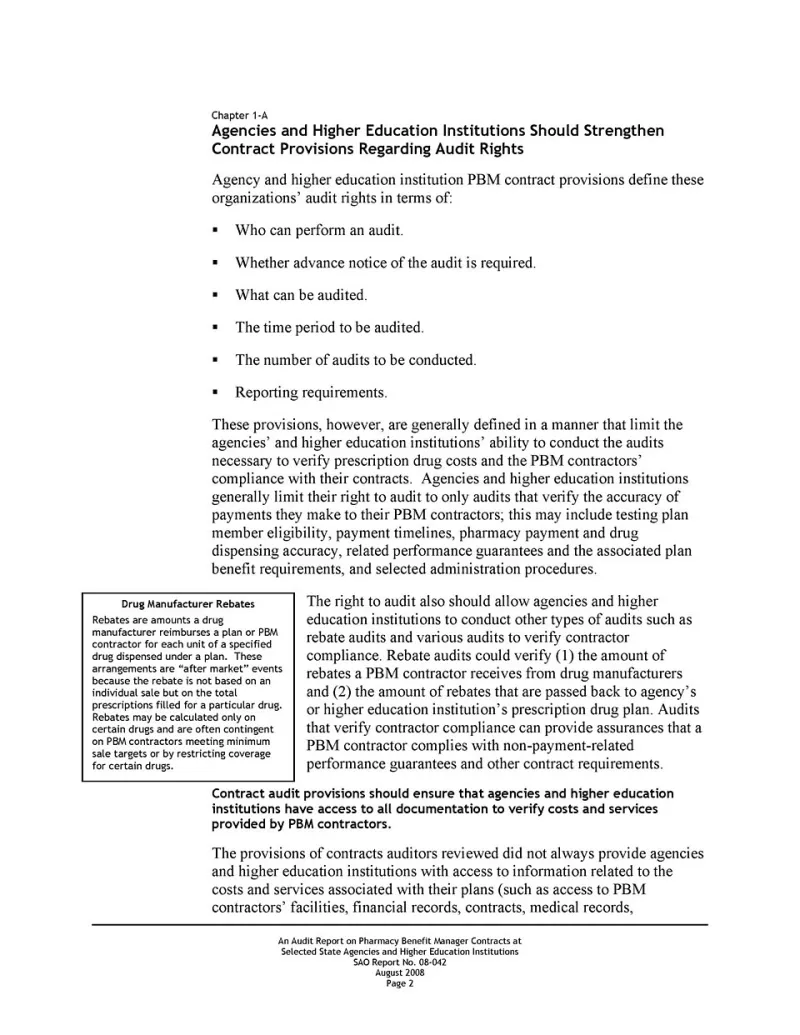
Photo: Texas. Office of the State Auditor; Keel, John, Public domain, via Wikimedia Commons
Every time you hand over your insurance card at a pharmacy, a remarkably complex financial transaction takes place in the background — one involving contracts, rebates, and pricing agreements that you, as the patient, are almost certainly not permitted to see. At the center of this transaction sits an entity most Americans have never heard of: the Pharmacy Benefit Manager, or PBM.
These intermediaries — dominated by three firms that collectively administer drug benefits for the majority of insured Americans — wield enormous influence over which medications appear on your plan's formulary, which tier those drugs occupy, and ultimately, what you pay out of pocket. Yet the pricing logic that drives those decisions is almost entirely shielded from public view.
Understanding how that opacity works, and what it costs you, is the first step toward fighting back.
What a PBM Actually Does
On the surface, Pharmacy Benefit Managers exist to administer prescription drug benefits on behalf of insurers, employers, and government health programs. They process claims, maintain pharmacy networks, and negotiate drug prices with manufacturers and retail chains.
But the mechanism that generates the most controversy — and the most secrecy — is the rebate system. When a drug manufacturer wants its product placed favorably on a PBM's formulary (meaning a lower tier with smaller patient copays), it typically pays the PBM a rebate. These are confidential, per-unit payments that flow back from the manufacturer to the PBM after a drug is dispensed.
The size of those rebates can be staggering. Industry analysts and federal investigators have estimated that rebate payments across the US pharmaceutical supply chain total tens of billions of dollars annually. Yet in most cases, neither patients nor their physicians know those rebates exist, let alone how large they are or whether any portion passes through to reduce premiums or out-of-pocket costs.
The Information Asymmetry Problem
Consider what happens when your doctor prescribes a brand-name medication. Your insurer's formulary — managed by a PBM — may place that drug on Tier 3, meaning a $60 copay. A therapeutically similar alternative sits on Tier 1 at $10. The formulary tier placement, however, may have less to do with clinical equivalence than with which manufacturer paid a larger rebate to secure preferred positioning.
You, the patient, see only the tier and the copay. You do not see the net price your insurer actually paid after rebates. You do not see whether a competing drug would have been just as effective at a fraction of the cost. You cannot easily determine whether the list price you're paying bears any relationship to what your plan negotiated.
This is the information asymmetry at the heart of the PBM model. Insurers theoretically possess detailed pricing data. PBMs certainly do. Manufacturers know exactly what rebates they paid. Pharmacies know their reimbursement rates. But federal law has historically required none of these parties to share that information with the person whose health and finances depend on it most.
Why Formulary Tiers Are Not What They Appear to Be
Most patients assume that a drug's formulary tier reflects its clinical value or safety profile. In practice, tier placement is often a commercial decision. A brand-name drug that commands a large rebate may occupy a more favorable tier than a generic that costs less overall but generates no rebate revenue for the PBM.
This dynamic can produce counterintuitive outcomes. Patients sometimes pay more for drugs that cost their insurer less, because the tier structure is calibrated around rebate economics rather than net cost transparency. In some documented cases, a drug's list price — which determines patient cost-sharing — is deliberately kept high precisely because it enables a larger rebate payment, creating a circular pricing arrangement that benefits manufacturers and PBMs while leaving patients to absorb inflated copays.
Federal Scrutiny and the Push for Transparency
Regulators have taken increasing notice of these dynamics. The Federal Trade Commission launched a study of PBM practices in 2022, issuing a critical interim report in 2024 that described how the largest PBMs used their market power in ways that raised costs for patients and independent pharmacies alike. Congress has considered, though not yet passed, legislation that would require PBMs to disclose rebate amounts and pass a greater share of savings directly to patients at the point of sale.
Some states have enacted their own disclosure requirements, mandating that PBMs report rebate revenue to state insurance regulators. However, those reports are rarely made public in a form that individual patients can use to evaluate their own drug costs.
The practical result is that transparency remains incomplete and inconsistent, varying by state, by plan type, and by the specific PBM administering your benefits.
Practical Strategies for Cutting Through the Opacity
While systemic reform remains a work in progress, patients are not entirely without recourse. Several approaches can help you approximate the real cost of your medications before you reach the pharmacy counter.
Request a formulary exception. If your physician believes a higher-tier drug is medically necessary, most plans have a formal exception process. A successful appeal can move a drug to a lower cost-sharing tier, sometimes dramatically reducing your copay.
Use your plan's cost estimator tool. Many insurers now offer online tools — often required under federal transparency rules — that display estimated out-of-pocket costs for specific drugs under your plan. These tools are imperfect but can surface significant price differences between alternatives.
Compare cash prices independently. Prescription pricing platforms aggregate cash prices across retail pharmacies and sometimes surface prices lower than your insured copay. Checking these resources before filling a prescription can reveal whether bypassing your insurance entirely makes financial sense for a particular drug.
Ask your pharmacist for the adjudicated price. When your pharmacist processes a claim, the system returns an adjudicated price — the actual amount your plan will pay and what you owe. Asking to see this before completing the transaction gives you a concrete number to work with and time to explore alternatives if the cost is prohibitive.
Request a therapeutic alternative conversation with your physician. If a drug on a lower formulary tier treats the same condition, your doctor can evaluate whether switching is clinically appropriate. PBMs do not make those substitution decisions — your physician does — but patients rarely know to initiate that conversation.
The Broader Cost of Opacity
The PBM pricing blackbox is not merely an inconvenience. It is a structural feature of the US drug pricing system that consistently transfers information — and therefore power — away from patients and toward intermediaries whose financial interests do not always align with lower consumer costs.
Until federal or state legislation mandates meaningful disclosure of rebate flows, formulary rationale, and net pricing data, patients will continue navigating a system in which the most consequential numbers are hidden from view. At RxPriceWatch, we believe that access to accurate, actionable pricing information is a prerequisite for informed healthcare decisions — and that the opacity surrounding PBM negotiations represents one of the most significant barriers to achieving it.
Knowing the system's limitations is not a solution, but it is a starting point. The strategies outlined above will not eliminate the information gap, but they can meaningfully reduce what it costs you.