Loyalty Programs at the Pharmacy Counter: Are Reward Points Costing You More Than They're Worth?
Photo: pharmacy loyalty card rewards program prescription counter, via mcglaughlins.co.uk
Walk into nearly any major pharmacy chain in the United States and you will encounter a familiar pitch: sign up for the rewards program, earn points on every purchase, and unlock member-exclusive pricing on select medications. CVS Health promotes its ExtraBucks Rewards program as a cornerstone of the pharmacy shopping experience. Walgreens offers myWalgreens, with tiered benefits and cash rewards on eligible purchases. Rite Aid, Walmart Pharmacy, and regional chains have followed with their own loyalty structures.
On the surface, these programs appear to be straightforward consumer benefits. In practice, the pricing mechanics behind them are considerably more complex — and for patients managing ongoing prescription costs, the distinction matters enormously.
How Pharmacy Loyalty Pricing Actually Works
To understand the loyalty program paradox, it helps to examine how pharmacies set their baseline prices in the first place. Unlike most consumer goods, prescription drug pricing at retail pharmacies operates through a layered system involving wholesaler acquisition costs, pharmacy benefit manager (PBM) contracts, and the pharmacy's own usual and customary (U&C) price — the list price charged to cash-paying customers without insurance or discount programs.
Loyalty programs introduce an additional pricing layer. Member prices are typically positioned as discounts off the U&C price, creating the impression of savings. What receives less attention is that the U&C price itself can be set with the loyalty discount already factored into the pharmacy's margin calculations. In other words, the reference price from which the discount is calculated may not reflect the most competitive rate available in the market.
This structure is not unique to pharmacies — retailers across many industries use similar anchoring strategies. What distinguishes the pharmacy context is that patients are often making decisions under time pressure, with limited price transparency, and with the reasonable assumption that their pharmacy relationship is built on trust rather than retail optimization.
The ExtraBucks and myWalgreens Comparison
CVS ExtraBucks Rewards operates primarily as a percentage-back program on qualifying purchases, including certain over-the-counter items and, in some cases, prescription-adjacent products. For many members, the rewards accumulate on front-of-store purchases and are then applied toward future transactions. The prescription benefit component is more limited than marketing materials sometimes suggest, with most prescription savings tied to specific promotional periods or select drug categories.
Walgreens myWalgreens offers a cash-back structure on qualifying purchases and promotes a "member price" designation on select products throughout the store. For prescriptions specifically, Walgreens has historically offered its Prescription Savings Club as a separate paid membership tier, distinct from the standard myWalgreens enrollment.
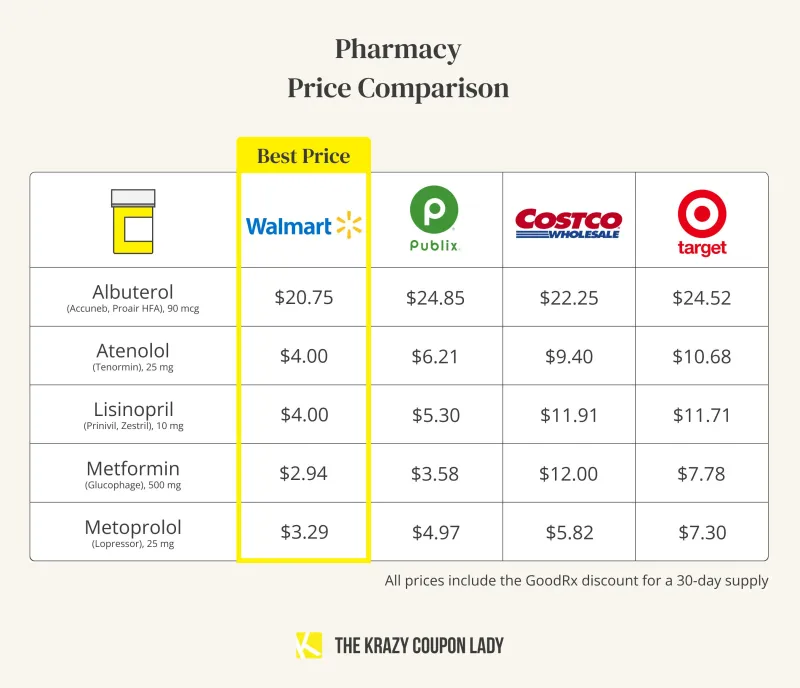
When RxPriceWatch compared member prices on a selection of commonly prescribed generic medications — including metformin, lisinopril, atorvastatin, and levothyroxine — against prices available through third-party discount platforms such as GoodRx, NeedyMeds, and Blink Health, the results were instructive. In the majority of cases examined, the third-party discount price matched or undercut the loyalty member price, sometimes by a substantial margin. For a 90-day supply of generic atorvastatin 20mg, for example, the loyalty member price at one major chain exceeded the GoodRx rate at the same pharmacy by more than 30 percent.
The Psychological Architecture of Points
Beyond the direct pricing comparison, loyalty programs are designed to influence behavior in ways that may work against a patient's financial interests. Points accumulation creates a psychological commitment to a single pharmacy, reducing the likelihood that a member will comparison shop across competing locations or platforms. The anticipated reward of future savings can outweigh the immediate recognition of present overpayment — a dynamic well-documented in behavioral economics research.
For patients on maintenance medications with consistent monthly refill schedules, this loyalty lock-in effect is particularly significant. A patient filling a 30-day supply of a brand-name medication twelve times per year at a loyalty-program pharmacy may be accumulating modest rewards while forgoing meaningful per-fill savings available elsewhere. Across a calendar year, that differential can reach into the hundreds of dollars for certain drug categories.
Which Medication Categories Carry the Highest Loyalty Markup Risk
Not all drug categories carry equal exposure to loyalty program pricing distortions. Based on pricing data reviewed by RxPriceWatch, the following categories warrant particular scrutiny:
Generic maintenance medications — drugs taken daily for chronic conditions such as hypertension, diabetes, and thyroid disorders — tend to have the widest spread between loyalty member prices and third-party discount rates. Because these medications are filled repeatedly and automatically, patients are less likely to actively reprice them.
Specialty generics with limited market competition also show notable variation. When fewer manufacturers produce a given generic formulation, the competitive pressure that drives prices down is weaker, giving pharmacies more latitude in setting their U&C and member prices.
Combination medications — single-pill formulations that combine two established generics — frequently carry higher prices than purchasing the component drugs separately, and loyalty discounts on these products may still leave patients paying more than necessary.
Conversely, brand-name medications subject to active PBM contracts and copay structures are less likely to be affected by loyalty program pricing, since the insurance adjudication process sets the patient's out-of-pocket cost independently of the pharmacy's retail pricing.
A More Effective Strategy for Prescription Cost Management
The evidence suggests that loyalty program enrollment should not serve as a primary cost-containment strategy for prescription medications. A more systematic approach involves several complementary steps.
First, obtain a price comparison for every new prescription and at regular intervals for maintenance medications. Free tools including GoodRx, RxSaver, and the pharmacy's own discount programs (which are often separate from loyalty memberships) can reveal significant variation within a single ZIP code.
Second, do not assume that loyalty membership and third-party discount pricing are mutually exclusive. In many cases, presenting a discount coupon at the pharmacy counter will override the loyalty member price, and patients can continue accumulating points on other purchases while paying the lower prescription rate — though individual pharmacy policies vary.
Third, consider whether a paid prescription savings club, such as those offered by some regional chains or through organizations like AAA, provides better per-fill value than a points-based loyalty structure for your specific medication list.
Finally, ask your pharmacist directly whether the price you are being quoted is the lowest available at that location. Pharmacists are not always prompted to volunteer this information, but they are often in a position to apply alternative pricing when asked.
The Transparency Imperative
The fundamental challenge with pharmacy loyalty programs is not that they lack value entirely — for front-of-store purchases and certain promotional categories, they may deliver genuine savings. The problem is that the prescription pricing component is rarely as transparent as patients deserve, and the program's design inherently discourages the comparison shopping behavior that would most benefit consumers.
At RxPriceWatch, our position is straightforward: informed patients make better financial decisions. Loyalty programs are a legitimate retail tool, but they function most effectively for the pharmacy when patients treat them as a substitute for price awareness rather than a supplement to it. Understanding that distinction is the first step toward ensuring that your pharmacy relationship works in your financial interest — not against it.